
How Organic Growth Effects Design
Building a brand with no money changes everything. With no ads or shortcuts, organic growth becomes more than a strategy; it starts shaping the design itself. This is what happens when you’re forced to build something that earns attention instead of buying it.
I started this business with an idea, a pencil and every free version of software you can imagine, from google docs to the first free-website blog.
I haven’t spent anything on ads, sponsorship or traffic. Yet.
It’s been 8 months since I launched the shop and over a year of solid build from websites to caps. I had to do it this way.
Organic cotton, emblematic of our organic growth journey
Socials are not the only strategy
Organic growth on social media, is like swimming upstream.
You are playing for free, in a pay to play environment.
Platforms that are designed to feed you sponsored content, are not going to prioritise unpaid content, that’s the simple version. Never mind algorithms.
It’s also unavoidable if you’re trying to sell something whether that is a t-shirt, a service or your personality. When you have a zero spend strategy, it’s a brutal combination. Unless you happen to have a large…personality.
It means slow growth, minimal distribution and many nights spent looking at every single little thing to make sure that I have done everything I can to move any kind of lever because that is all I can do.
Which also got me thinking…
What if all socials vanished tomorrow?
How would you promote your business?
No Instagram, no TikTok, no Reddit, imagine absolutely everything was gone or this list will get stupid.
What would you do to get the word out?
It’s made me look at what we offer in a different way.
On platforms made to entertain, how do I entertain? And how do I reach people offline?
I started looking for growth opportunity elsewhere, for story, for development, at strategy and landed on something interesting.
Recognise The Canis
This is fragment one. This is the start of what has been a seemingly endless development journey which has led me to characters, tokens and worlds. It’s unfolding and to be discovered. And the reason why I’ve been scribbling down notes at 1am again.
Cryptic I know
And for good reason. Find The Canis. This is an example of what zero spend can do to design, when you’re forced to design your way out of constraints. It’s conceptual and being slowly released but, on paper, almost brilliant.
Organic design is the outcome
I’m not going to lie, although it’s a constant constraint, zero spend is fundamental for another few months, whether that is fortunate, or unfortunate remains to be seen.
What it does to your design strategy, however, is worth experiencing.
What do you do when you can’t buy attention?
It’s an exercise I’d recommend to any founder. If you can handle it. I have started from zero. I have fully formed business architecture, a designer range in development, a sustainable, circular core system that has just morphed into The Canis, and it all started with a blog called The Pavement Special. I don’t mean to blow smoke up my ass, but no one else is so…
I’m painfully aware of how many businesses fail and how many challenges there are ahead. I just can’t seem to stop. Sometimes I think I should…but then I end up starting another design, or mapping out worlds or fretting over dye, or sitting down to write, or making tiktoks (shakes her fists at the sky), or working on strategy, or tweaking the website, or…
P.S Or that’s how you know this wasn’t written by AI. K’ Bye.
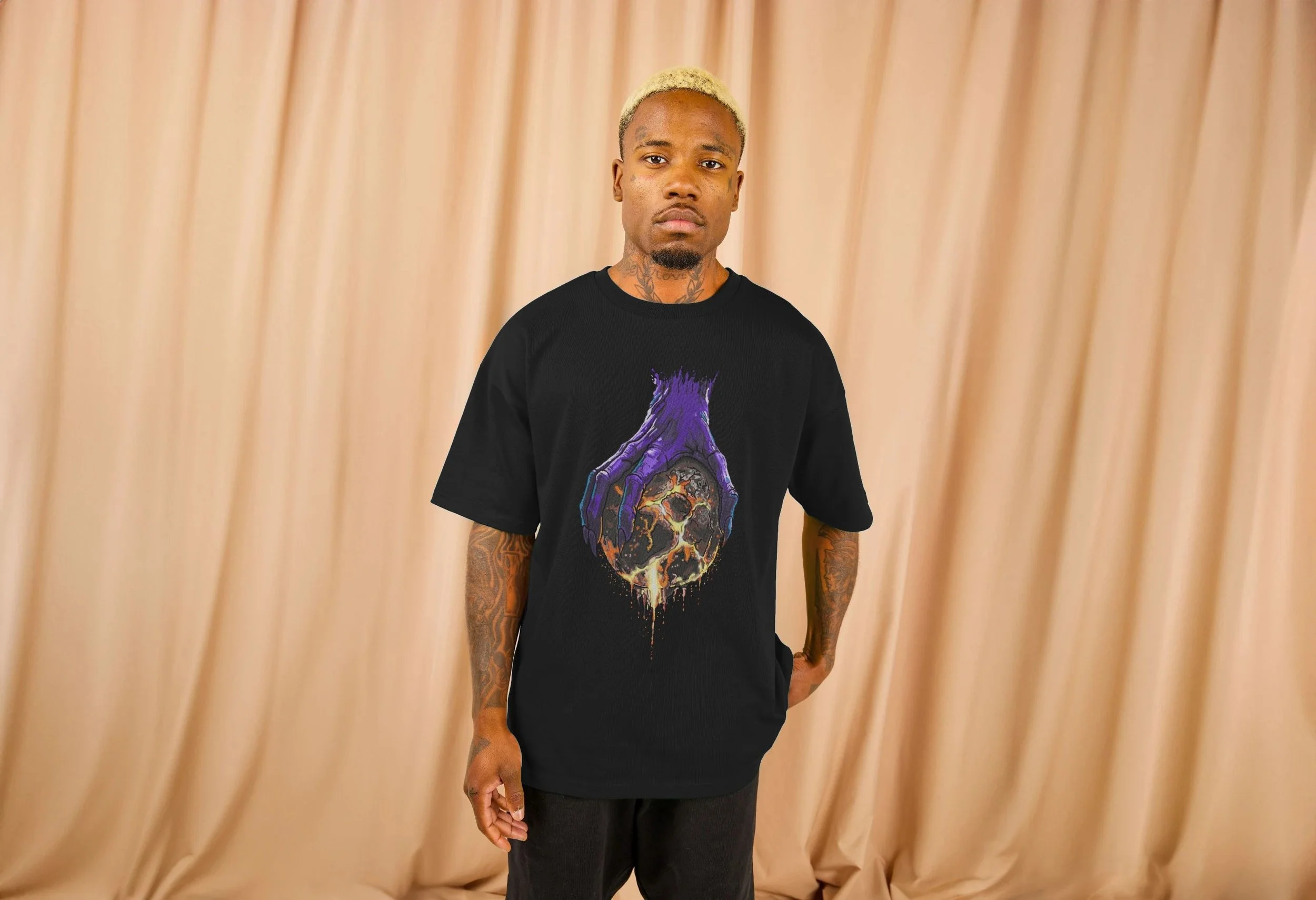
Ultraviolet Fractal
When I drew Ultraviolet in the early 2000s I was wrestling with the same questions I'm wrestling with now. The global issues haven't moved. Unless you count backwards as movement. This is the next chapter.
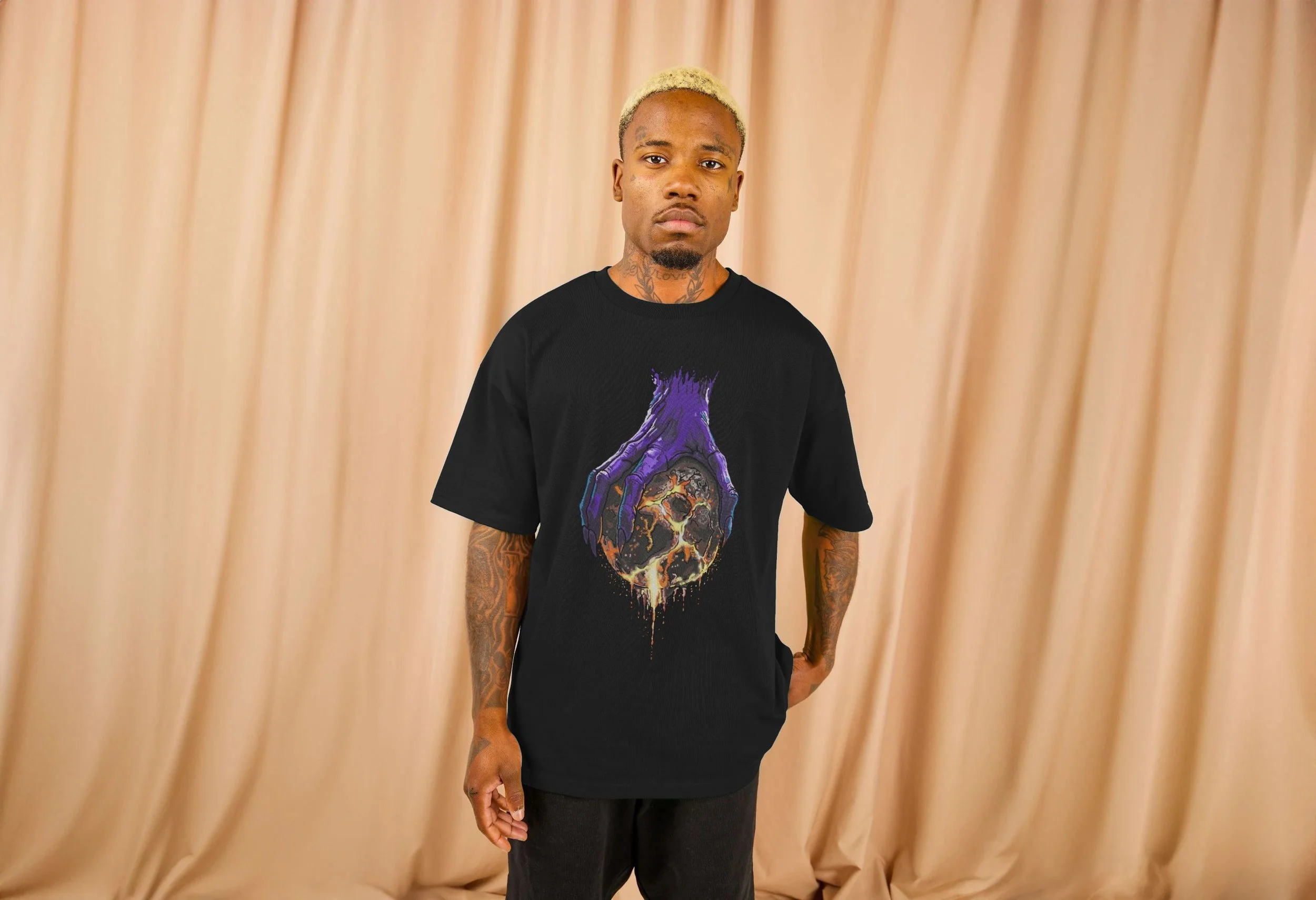
Model wearing Ultraviolet Fractal - Organic Streetwear for those unbroken.
When I drew Ultraviolet in the early 2000’s, I was wrestling with a lot of the same concerns as I am now. Not because my life hasn’t moved, it has, but the global issues I was thinking about at 17, haven’t.
Unless you count backwards as movement.
Creator or Destroyer
It’s about wrestling with the existential and where you place judgement. If you fix it here, does it break there? How do you know anything? How do you know what you don’t know? Are we creating or destroying? Earth or Purgatory? Are we alive or dead? That’s what I thought about at 17 – read into that what you will.
I’ve just finished Ultraviolet Fractal
The next chapter in the story. It’s the twenty year later version of the same questions. It’s the start of Ultraviolet as a character, and each new iteration, is an exploration of that story. Organic streetwear for those unbroken. Still building, still trying, still fighting. Still figuring it out.
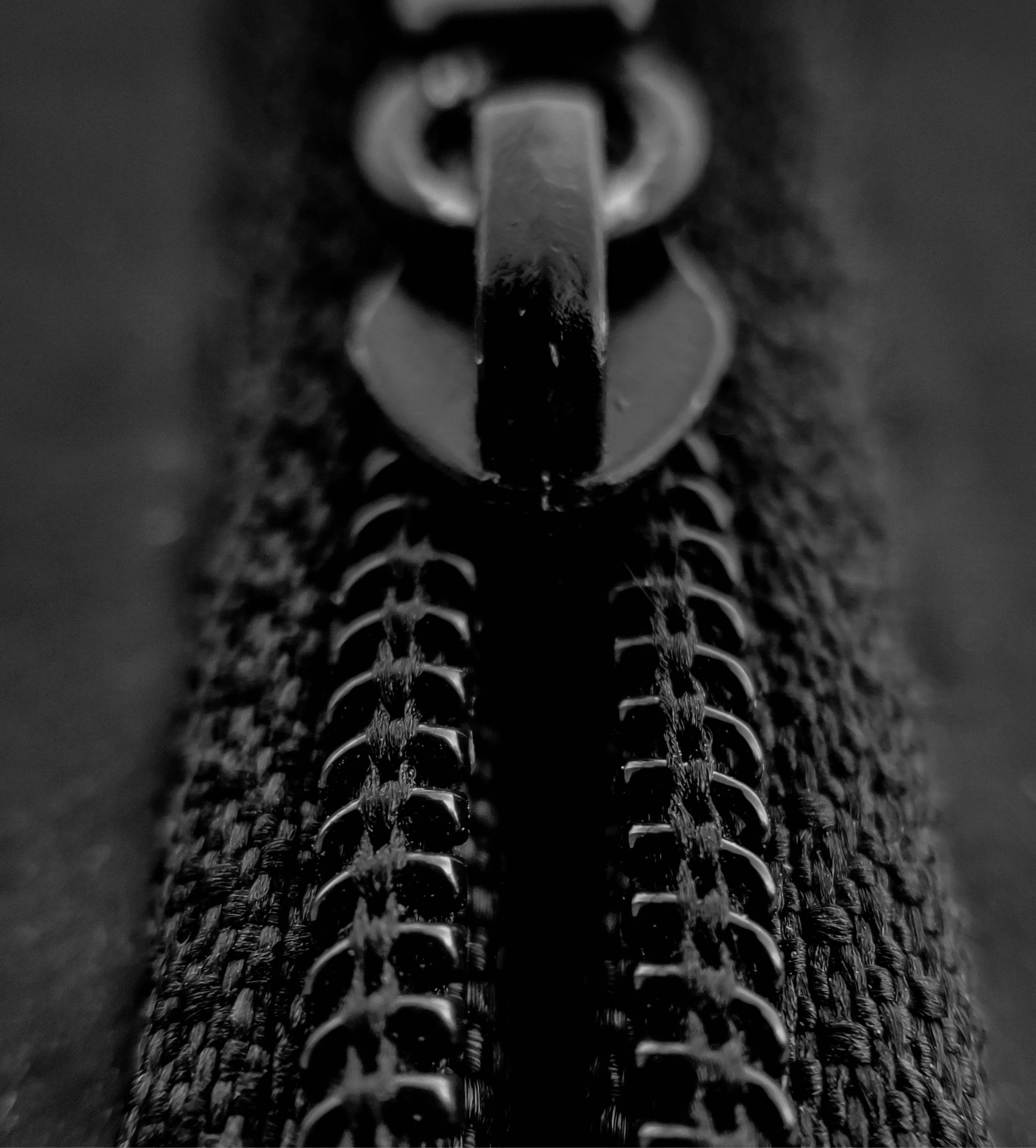
The draughty neck
Zip it all the way up and you've still got an inch of neck to the wind. A quick one about design shortcuts, zips that fail in month one, and what building for lifetime wear actually looks like from the inside.
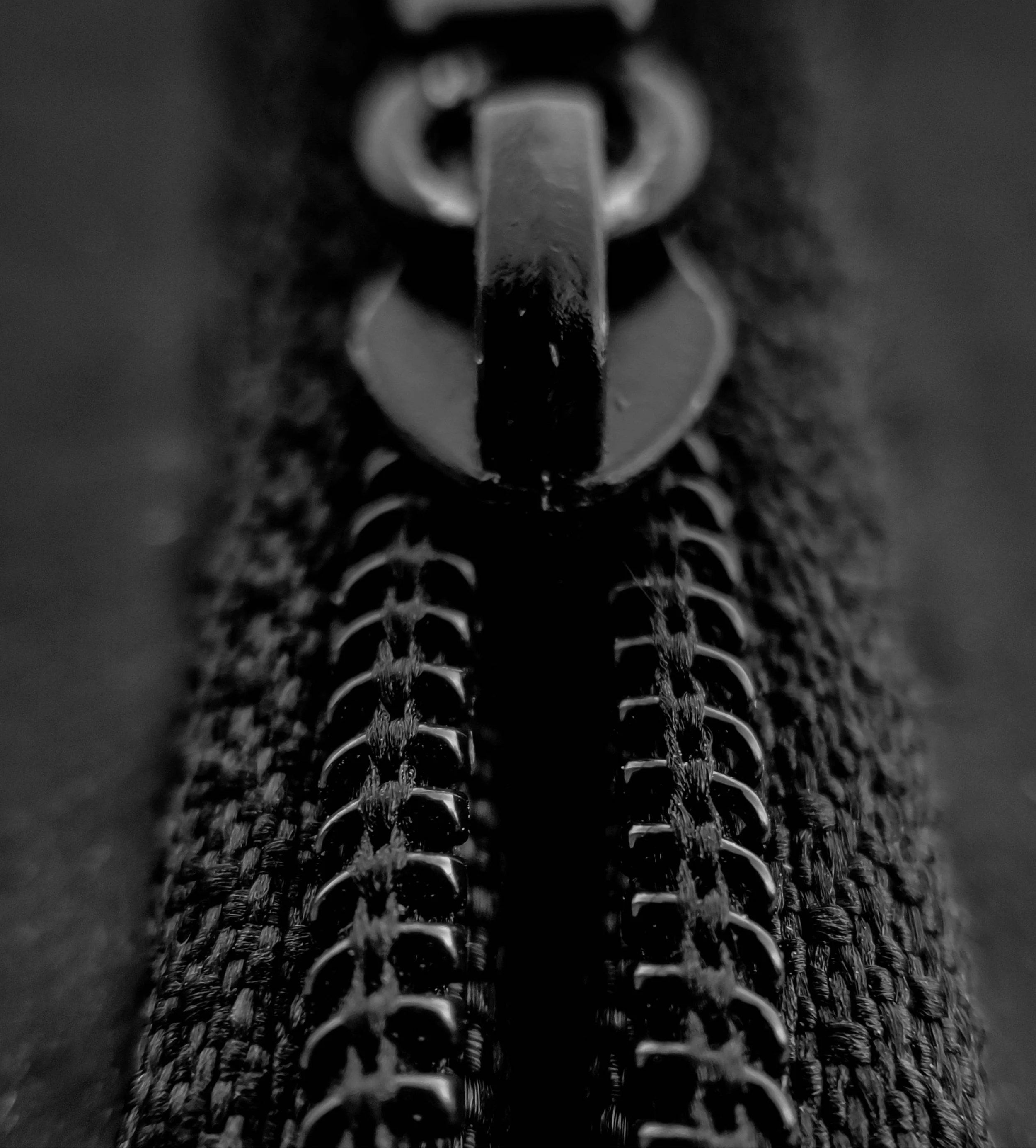
How many times can you zip before it fails?
I'm obsessing about necks. Hoodies specifically. It's still cold, summer is theoretical at best, and I've been staring at a zip that stops at the collarbone.
That's right. Zip it all the way up and you've still got an inch of neck to the wind. Design shortcut, plain and simple.
Zip’s that fail in month one
I've owned garments that are ancient. The zip still works perfectly. I've owned branded hoodies, and no-name, but branded hurts- selling you hype and tribe hoodies where the zip gave up before the first month was out.
It's easy to fake quality on the hanger. Before the third wash. Before the 50th zip. After that, you find out what you actually bought.
A zip upgrade adds cost per unit. A stitch density change adds cost per unit. These decisions get made, quietly, in favour of margin. The sale is what matters and it ends there.
I get it. Getting things made well is genuinely hard. The entire manufacturing industry is, from a structural perspective, substandard. That's not an excuse, it's the problem. It’s just how it’s done. This is changing, fast.
So, what do you do with that?
You research. Zips that don't fail exist- you’ll find them in mountain wear, for example. Who makes them, who tests them, are they compatible with the garments you're building.
And then you think about everything else. Colours that are kind to sweat. Care and repair. Spares for the parts that can't manage 25 years. A 14-year-old People Tree (RIP) sweater in my cupboard with fraying sleeves tells me organic cotton can go the distance; the rest is just decisions.
That's what building for lifetime wear actually looks like from the inside. Whether it’s zips or fasteners, plastic or metal, recyclable or not, all these designs effect the cost and profit outcomes, do I believe it is possible for Mongrel Logic to change the world in this regard? No, I’m not that naïve. But I am determined to try anyway. Now if you’ll excuse me, I need to go change my underpants.
What is Mongrel Logic
Mongrel Logic is me. A blog, two littermate puppies, a dog attack, and drawings I carried across continents for 20 years. This is how it started.
It’s been a little while since I have answered this question.
Mongrel Logic is me.
A flip on a negative
A close up the Pastel Eye design.
I’m not an idiot when it comes to linguistics. I am also not an idiot when it comes to emotions. I chose the name The Pavement Special originally, to name a thing that hadn’t been defined. That way I could write about whatever I wanted and in theory, the name could remain unchanged. I do enjoy business architecture.
I started a blog with no direction, zero SEO, literally a digitised dear diary. I needed a place to just write without thinking too much.
But, I spent 8 months not doing anything because I got two puppies. the month after starting it. Two. Littermates. If you know, you know. Turns out I am an idiot about some things.
One sunny afternoon we were coming off a dog walk, we were attacked by a bigger dog, who lives in our cul-de-sac, I might add. Everyone was physically ok. Lex has never been the same since. He thought the world was butterflies and sunshine before that moment. Zen is the more, suffer in silence, type. Just like me.
Rage fuelled caps
I was so angry about the dog off lead, the effect on the puppies, the effect on me, the fact that he made no adjustments and just kept walking the dog past our house, every day, three times a day. We had to make all the adjustments. I don’t blame the dog. Ever.
But a piece of my mind involves a piece of my fist due to the rage around this situation, so I decided to do something else instead.
Try to raise awareness, make a cap, donate profits to an organisation that cared about dog welfare and who can lobby. I have not forgotten about this. I never will.
And when it comes to animal welfare, the welfare of those less fortunate, you have found my hulk smash button. Now, I don’t have big fists, in fact when I look at a pinky-finger I am baffled that such a small bony thing can exist.
I built a monster
I started working on the embroidery for the cap first, and I started looking at makers. Very soon discovered that my print on demand idea was not executable. No custom fabrics. Hardly anyone did embroidery at that level.
I knew I needed to have the fabric made. I knew the cap construction needed to be custom, the embroidery needed an expert. I started hunting.
This is where the designer range was born. Months of research, designing, and work and some number crunching, led to me to where I am now. I have spent nothing on this business; aside from running the websites, I don’t have anything to spend. As much as it is a practical reality for me, it is also part of a system I am testing. The reproducibility of the model. More on that later.
When I understood what I needed to get the cap made, the designer range off the ground, I knew I needed an engine. Something to fuel the designer range, that could stand on its own as well as exist as crossover, and crucially, matched the ethos of the luxury streetwear range I was developing. I needed one project to fund the next one. Yes, fuck is right.
That’s when the art came into it, drawings that for some inexplicable reason I had held onto, taken across continents with me, suddenly had a purpose. The worlds I was building as a teenager, the stories, characters, novellas and the fifth try at starting a business and the second at a clothing line, suddenly all made sense.
That was the last time anything made sense. Haha.
Being responsible for the life cycle of your product is extremely important to me. I was born in Africa. I have lived equal numbers of years on both the African and European continents by now. I know what it is like to be part of the problem and part of the solution.
I’m far from perfect, but I am so sick of the lazy, profit driven, greed led approach to business that I wanted to build something better.
Where regulations follow
You can call me naïve in 12-24 months, in the meantime, hold my beer. You may not be old enough to remember this, but products used to come with a lifetime guarantee. Microwaves, dishwashers, washing machines, fridges, all came with a guarantee. Not a warranty, a guarantee. These days it’s hard to find anything that lasts more than 12 months. Organic cotton will still be in your wardrobe in a decade, just starting to fray.
When you design with the product’s entire life cycle in mind, you need to ensure you can answer for its journey once its owner is done with it, and it has to be made first from ingredients that allow it to be returned, remade.
Being early is only half the problem
I hope I get to bring my vision to life. I’m never convinced that it’ll work, but I am determined to try, because if it does, we are ahead of the regulations that will absolutely be brought in regarding product lifecycle.
When I chose Teemill, it was because they aligned on a design level.
When I ordered my first sample, I was honestly surprised at the quality. And the print colour was stunning. I knew I had found my engine. It’s been 7 months since I launched the shop, and it’s been 9 months since I came up with the idea for the cap. I feel like I’ve been working for four years.
The fact that I can’t spend on growth is agonising, but also crucial for the first 12 months. Which is kinda soul destroying in a way, being in this phase of the business, I have no idea what people think. Releasing vintage, unchanged teenage art first, was the hardest test this little engine could pass. And we did.
Designing with constraint, whether that is showing art that was in skill unrefined, and not changing it, designing within our print box, no sleeves, no backs, no cuffs, no detail, has honestly allowed me to play in ways I never imagined with the designer range and prompted me to think about details I might have otherwise overlooked.
I can honestly say there is nothing like it out there. For both our everyday sustainable, circular streetwear range and our designer range. I’m not here to shit on other people’s designs, I love streetwear. Whether understated or street couture that serves one purpose and that is to photograph, I’ve been a lifelong fan. Are we the underdog? Absolutely, this was built for underdogs. Will you have seen anything like this before? No. Why? Cos I drew it when I was 14, 16, 17. Etc. And because I have been designing this range for a very long time.
Way before the dogs, before the blog, when I was still in primary school, scrap booking fabrics, dresses, cuts, colours.
This is Mongrel Logic.
Textile investigation
Exploring the tension between waterproofing and dye, from toxic coatings to Ventile cotton. A look at textile innovation and how Mongrel Logic approaches sustainable streetwear materials.
Olive and water - the design problem in one image
Not the sleuth, cat burglar kind of investigating. The kind where you realise you have been staring into a screen and not blinked for fifteen minutes. It’s also the term you land on when you were trying to think of something Inspector Gadget related and can only recall the rude versions.
Keeping you dry
Isn’t just challenging, it’s often toxic. Waterproofing is an active area of innovation and because of this, many brands that are in the business of keeping you dry have their own R&D, working on new materials, new methods. This is where textile innovation, waterproof fabrics, and sustainable streetwear start to collide.
Oil and water
I’m looking at this from the perspective of dye and print, and how textiles behave in real garments. Finding something that holds dye, specifically when it comes to translating artwork to garment, that is also waterproof, is a bit like oil and water.
Enter the Manchester textile industry
I know, I know, cotton. Honestly, I keep coming back to it, regardless of where I go. Ventile was developed by the Shirley Institute in Manchester, England. A dense, weatherproof cotton fabric that works without synthetic coatings. It’s a long story involving the need for a new type of flight suit for the RAF. But it resulted in PFAS free weatherproof material.
Materially aligned
I could list many more examples of innovative design like Colorifix, using engineered micro-organisms that create dyes, replacing what has traditionally been a heavy chemical process. It’s fascinating, and it’s all feeding into the development of the designer range. Even if it makes ‘the’ list of what not to use. It’s already fed into our core range, and why we chose GOTS certified organic cotton. And it’s why we print the way we do.
Go-Go…textile innovation
I know I’m not making flight suits. Designing something that lasts, without relying on harmful materials or processes, is crucial. If you’re going to make it, how does it break down, how does it return, that is where this list becomes, shorter. For now.
Built through circular systems.
Shop the Core range.
You've Been Sold Short
For a long time, streetwear meant hype or basics. Neither was built for you. Here's what better looks like.
For a long time, streetwear meant one of two things.
Hype. Or basics.
Either you were chasing a drop, refreshing a page at 8am for something you'd resell before you wore it, or you were buying a logo on a blank and calling it culture. Neither of those is fashion. Neither of those is art. And neither of them was built for you.
You were sold the idea that luxury lives behind a velvet rope. That it speaks a language you weren't born into. That it belongs to someone else, someone with the right postcode, the right accent, the right everything.
That was always a lie.
Mongrel Logic organic cotton
Luxury is construction
Fabric. Longevity. The feeling of putting something on and knowing immediately, this was made to last. Not made to trend. Not made to be binned in a season. Made to become part of how you move through the world. Streetwear at its best was always that.
The street has always been the catwalk
The difference is who's been building for it.
Mongrel Logic started from a simple dissatisfaction
With what exists, with what's accepted, with the gap between what people deserve and what they're being offered.
Artwork mapped onto garment
Fabric that reads like graffiti, like tattoos, like something with a past and a future. Not a clever play on words. Not a trend cycle mood board. Something that rewires how you think about what you put on your body.
Expect better. Wear better. Build better.
That's not a slogan. It's the only direction this was ever going.
This One's For The Underdogs
Not the word. The actual thing. Mongrel Logic was built for the ones who were too loud, too quiet, too weird, too much, and still showed up.
Not the word. The actual thing, Mongrel Logic.
The kids who cleared hallways just by existing. The ones who were too loud, too quiet, too weird, too much, not enough. The ones who got their lunch money taken and their ideas ignored and still showed up the next day with something to prove.
Mongrel Logic, built for the underdogs. Lex the dog, brand mascot and co-founder.
That's who Mongrel Logic is for
Not because it's a good marketing angle. Because it's where this came from. I am the weirdo. The loner. The underdog mongrel who will not stop once it sets its mind on something. I built this because I had to and I built it for the people who understand that feeling without needing it explained.
Metal heads. Hip hop heads. Underground everything. People who'd like to see the world work better and have quietly stopped waiting for permission. People who don't need external validation and have learned to survive without it even when they do.
You don't wear Mongrel Logic to fit in
You wear it because you stopped trying to. The street is the catwalk. Always has been. We just build like we know it.

