

The Problem With Circularity
Circularity sounds simple until you look closer. Textile waste, fast fashion, affordability and regulation are all pulling in different directions. Nobody has solved this yet.
We produce 92 million tonnes of textile waste globally per year, with projections rising further by 2030.
Circular fashion has a long way to go.
Voluntary schemes like Remill, has recovered over 100 tons of clothing in the first two years of opening the scheme to all brands.
This is why we don’t have a branded logo tag. So that you can recycle your tee or hoodie.
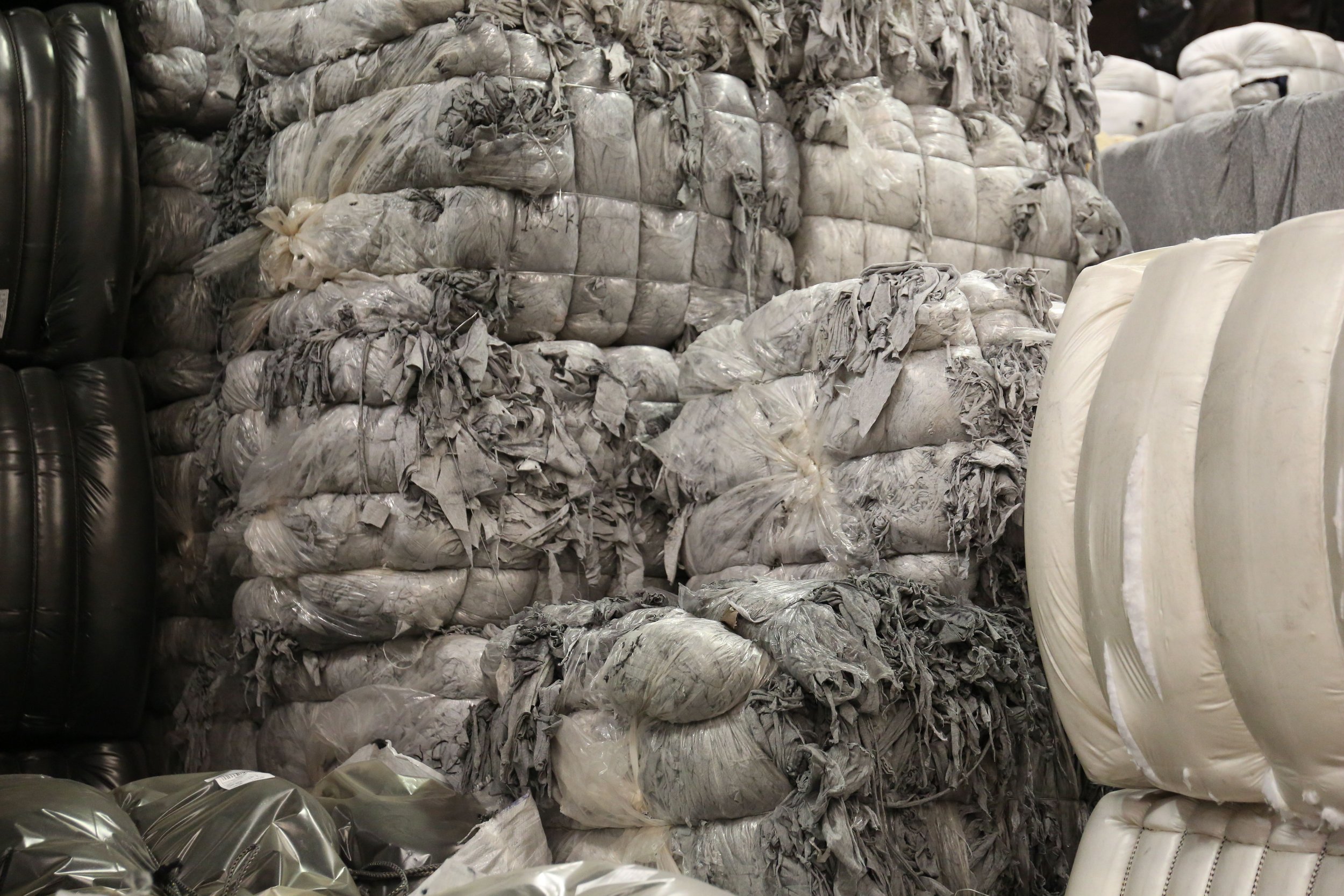
This is what recycled fashion looks like. Recovered, prepared for remanufacturing.
Asking people to change behaviour
I don’t think this is impossible, we do it all the time. Asking businesses to change, that’s another thing altogether.
Some fast-fashion retailers (you know who) add thousands of new products every day.
Which has been designed for speed, scale and profit rather than longevity, repairability or what happens once it's out in the world.
With fast fashion being increasingly the affordable choice, this is only going to get worse.
Poverty and Sustainability are linked
This is a tough one.
People living with fewer resources are often forced into behaviours that look sustainable from the outside. Having fewer options available isn’t the same thing as sustainability.
Being able to make ‘conscious choices’ is a privilege.
It shouldn’t have to be.
Does building circularity into a streetwear ARG help?
I don’t know yet. Is it going to help solve the worlds problems, probably not.
I’m bothered when business push recycling issues downstream, but in this case, downstream is where the t-shirt is.
People do need to be more invested in what they buy, how often they buy, which brands they support.
I don't know how you resolve these two conflicts.
Will change be regulated?
Many countries are developing textile waste regulations, but much of the sector still relies on voluntary participation.
Regulations are coming, but slowly.
How can a game fix this?
Well, that remains to be seen.
But if we are going to ask people to participate, then surely, we need to build something better. Not more expensive. Just with more meaning.
Not saying I’ve solved that.
Cash for recycled bottles (and t-shirts😉) aside.
Which I’m down for. But, we need so much more. Nobody has solved this yet.
I’m trying.
How To Make Garments Entertaining?
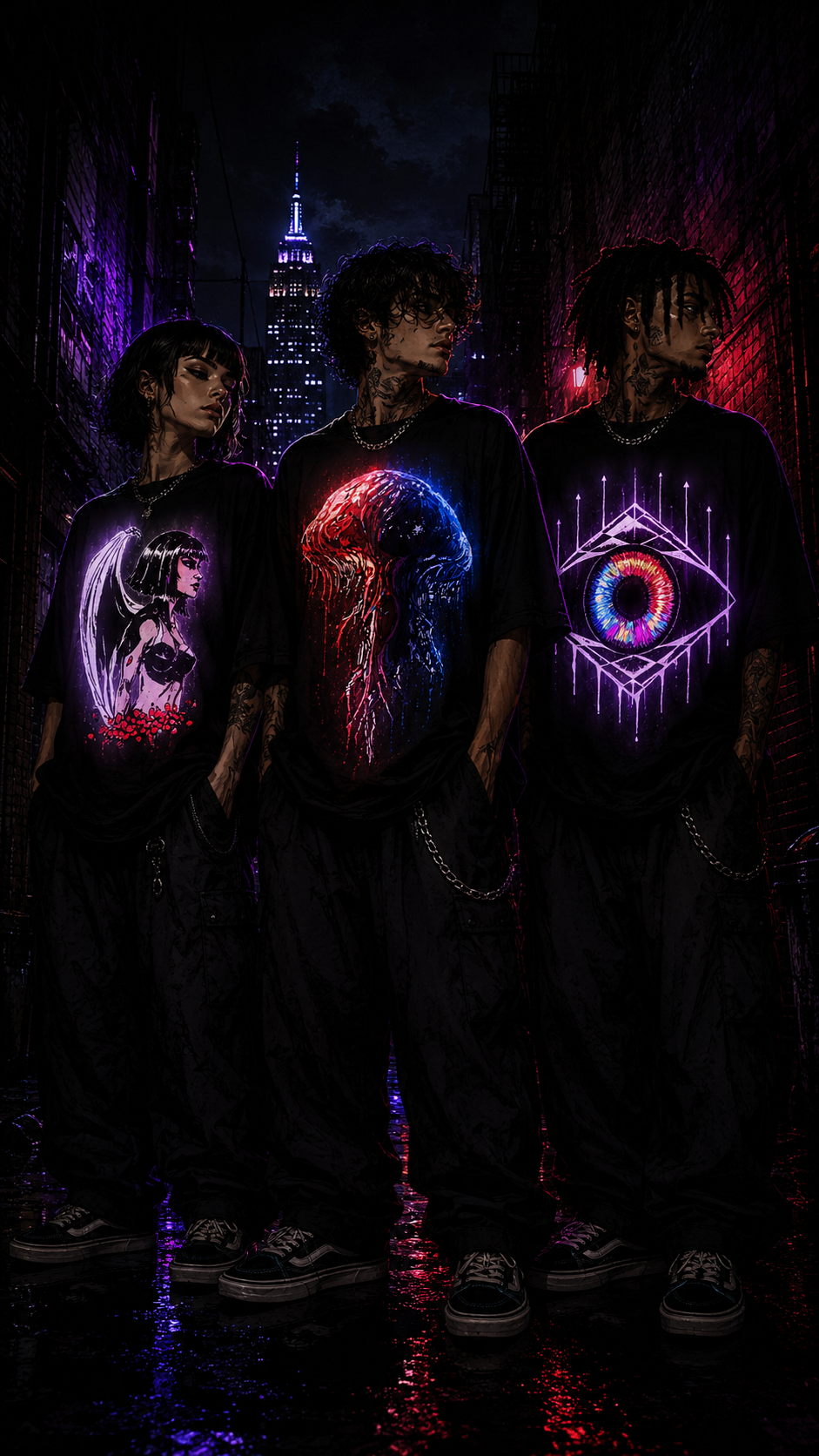
This is the story of how Mongrel Logic™ evolved into The Canis; a world built through comic storytelling, mythology, symbols and streetwear.
Visual exploration of The Canis; story telling through comics.
One of the reasons I don’t do too much ‘me working on this’ content, is the bulk of it is,
me sat behind a laptop occasionally staring into space,
me on the bathroom floor at midnight scribbling notes or
me being dragged through the woods by two dogs while deep in thought.
None of this is very TikTok friendly. But a consequence of having a job, dealing with life and building mythology.
The Canis
How could I make clothing entertaining? This was the question that started it all.
Well, there were a couple of big questions I was circling; how would you talk about your brand if there were no social media. Buffering on the second.
Some days of thought later I started mapping Mongrel Logic’s core range to games.
I had already been thinking of the drawings as characters, some of them having travelled with me across continents for the past 20 years, and that world was somewhat born back in the 90s and early 2000s.
I had this idea of Mongrel Logic trading cards for the longest time and not found a home for it yet, these two ideas merged and I found myself on the bathroom floor at midnight, (running a bath I don’t just go sit there) and scribbling notes on Pokémon, GTA, Minecraft, etc.
What about those games made people love them?
The language
I’m very good at some things, designing and systems is one of them; I build side entrances and back doors everywhere to allow me to pivot story, language, etc.
I already had some ‘for those who’ language in there, it sounded cool but had no real direction.
It suddenly found a purpose, the world started forming behind my eyes.
At the end of April “The Canis” had emerged, although it was called “The Pack” for about five seconds. And “hunt the logic” was floating for a moment.
The next steps were figuring out which character/design played which role in a newly evolving ARG with garments.
A couple of days of arguing with myself later, everyone had settled into their new roles, and it was like a light switched on. Things started making sense again. (First time in months)
The Canes {F}
The Canes are modelled after gravity, electromagnetism and the strong nuclear force. I circled this like a vulture for days.
Kar, Mur and Torn have Latin origins. For no other reason other than it sounded cool and like it could be unearthed, ancient.
While I was forming The Canes, I was simultaneously working on Spineless; the design that nearly broke everything, I wanted the world to carry meaning.
Spineless represents the real-world issues infecting The Canis.
If it worked, The Canis could have a repeatable ‘condition’ which I only realised after was kind of perfect; because jellyfish only appear in unstable conditions.
The Canes were forming while this condition was spreading and testing the world.
We came out the other side, tested, triumphed. Protected by tokens. Governed by The Canes, three cosmological forces that fight against conditions like Spinless.
Oh. The irony.
Sun Eater is next
I put that stupid doodle on a garment because I had had the store for about 3 months, I had no idea what I was building but I was showing up every day to build it, and this stupid grinning face kept staring at me.
I coloured him in grey; by the way; grey drawings don’t do so well on socials. Hahaha.
I put him in the store. I was working with GPT4 at the time. It used to have a ton of high school energy, it said and I quote, “bwaaaahahahahaaaa, I ate the sun but I’m sorry”
That’s how Sun Eater got his name. I used to have that quote on a tee, it may return. Right now, Sun Eater is traversing the universe, munching his way through stars, heading in our direction.
I have around 7 iterations of him, none of them are where I want him to be.
I was watching a video on dark matter the other night and have had a brain wave that I plan on trying later today. Look out for the comic on socials, if I’ve got it right, you’ll see him.
And if it works, then he truly is coming.
Comic book socials
Finally, finally, after months of trying to define what the hell I want to do with my socials that doesn’t involve my face.
The Canis has finally taken over my feed.
The Canis speaks. The Canes are governing. And Logic is transmitting.
Ultraviolet Fractal
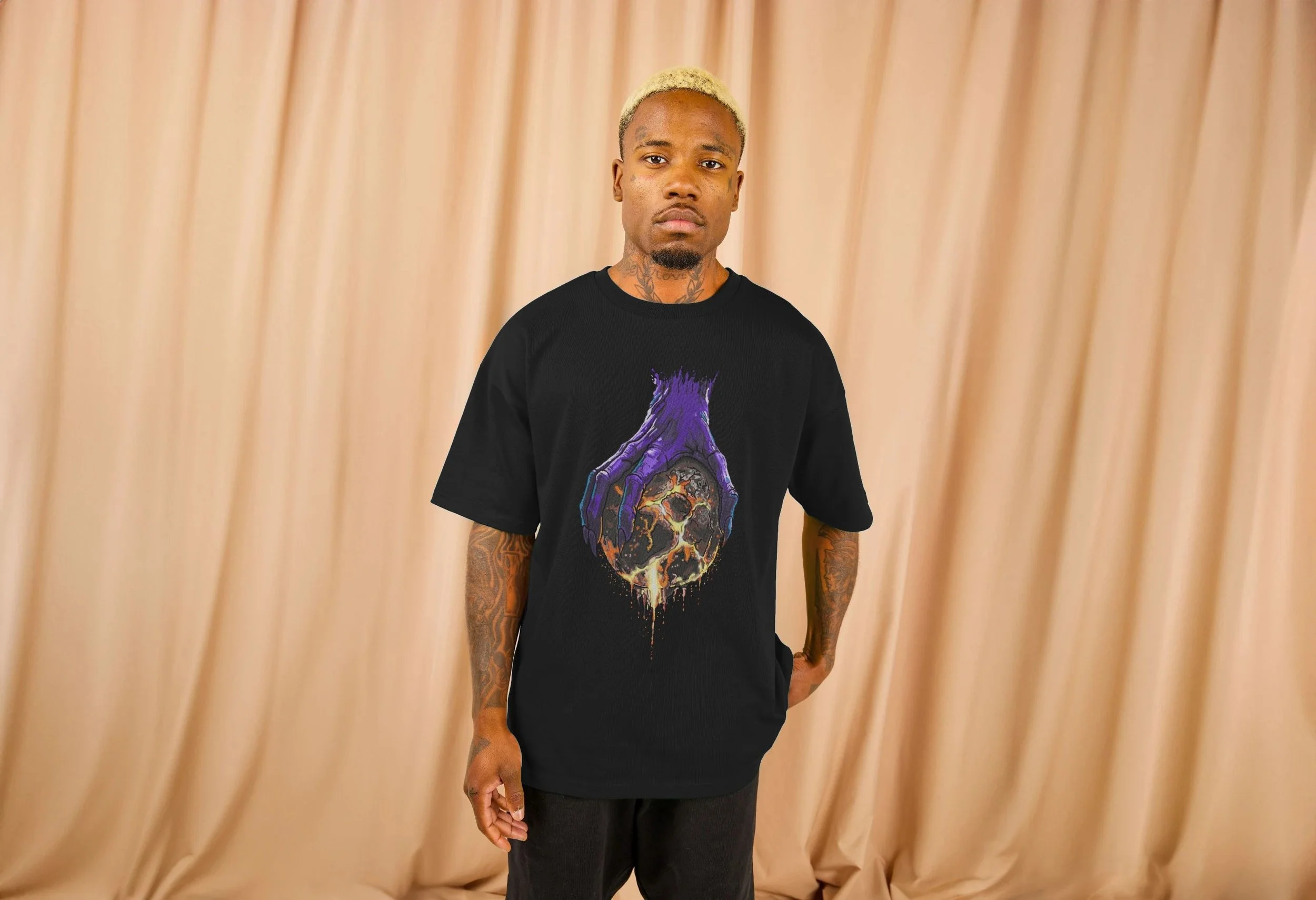
When I drew Ultraviolet in the early 2000s I was wrestling with the same questions I'm wrestling with now. The global issues haven't moved. Unless you count backwards as movement. This is the next chapter.
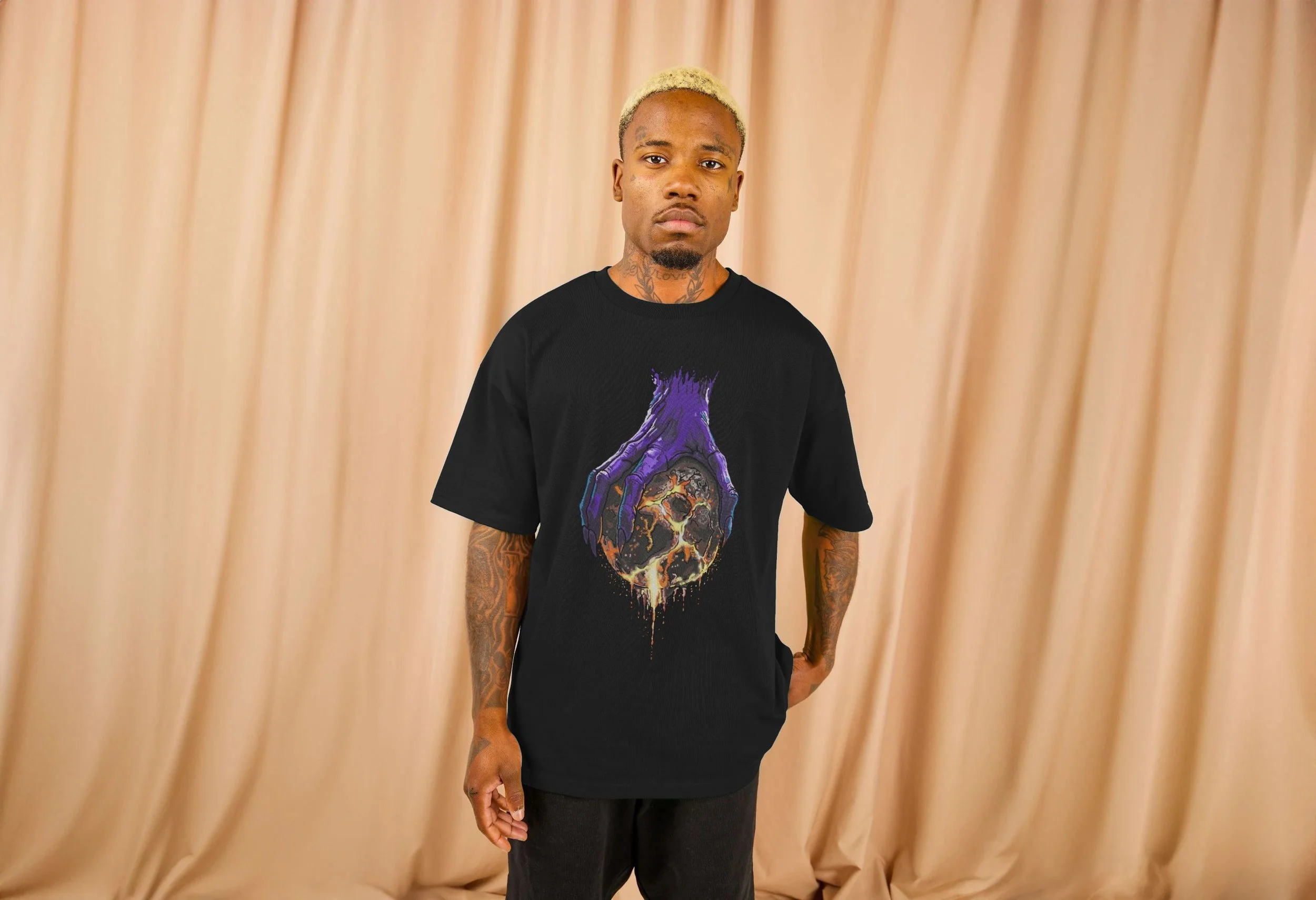
Model wearing Ultraviolet Fractal - Organic Streetwear for those unbroken.
When I drew Ultraviolet in the early 2000’s, I was wrestling with a lot of the same concerns as I am now. Not because my life hasn’t moved, it has, but the global issues I was thinking about at 17, haven’t.
Unless you count backwards as movement.
Creator or Destroyer
It’s about wrestling with the existential and where you place judgement. If you fix it here, does it break there? How do you know anything? How do you know what you don’t know? Are we creating or destroying? Earth or Purgatory? Are we alive or dead? That’s what I thought about at 17 – read into that what you will.
I’ve just finished Ultraviolet Fractal
The next chapter in the story. It’s the twenty year later version of the same questions. It’s the start of Ultraviolet as a character, and each new iteration, is an exploration of that story. Organic streetwear for those unbroken. Still building, still trying, still fighting. Still figuring it out.