

How I Designed a Game Around Streetwear
I started with a T-shirt design and no real plan. Somewhere along the way it became a world, a card game and a comic and an alternate reality streetwear game. Here’s how I built a game around streetwear.
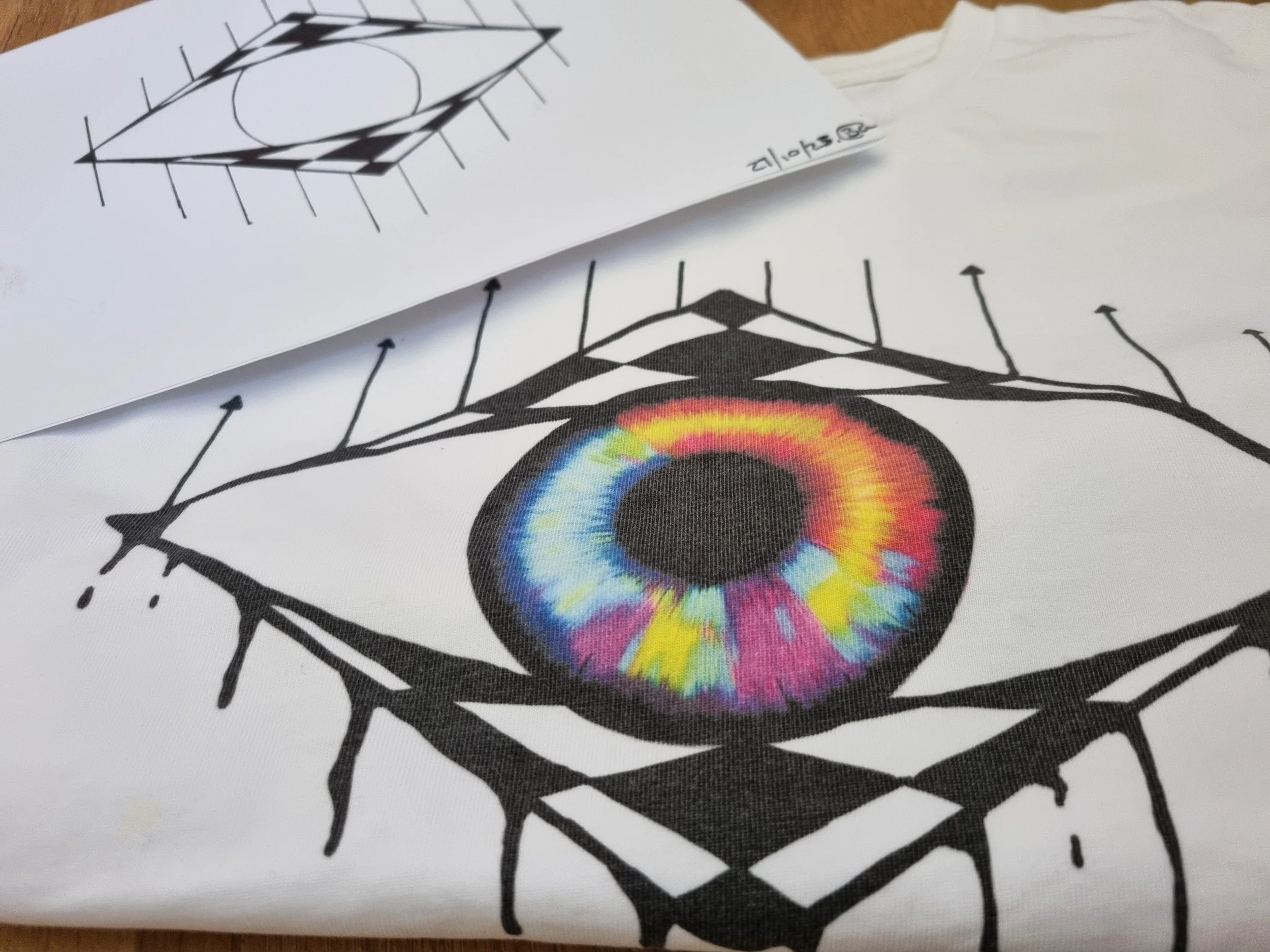
Geometric Eye was the first design that I drew for the Teemill store. I had no idea what kind of store I was building, other than sustainable. I knew I wanted it to be different.
At that stage I was cycling between everything from 90s retro symbols to geometric animals with no decisions. I knew I wanted to use my old art.
The first design, the geometric eye sketch and printed version.
Redesigning 20yr old characters
I took some of my old characters, drawings and sketches and put them in the store. I didn’t have a reason why. Some I redesigned slightly, and some I kept the same.
These became Logic, Tenet, Ultraviolet and Sun Eater.
Gradually, as I added more art, illegible to all but to me, the world was emerging.
Their stories were unfolding.
The characters were evolving and before I knew it I had a psychostasia judge, a slightly too experimental planet builder, an intergalactic backpacker who stopped by for the music and bubble wrap and an intergalactic star maggot who is happily munching on dying stars.
Unfortunately, that last one is heading toward ours.
Mapping game to garment
That was really the easy part. I researched different ways games communicate rules, worlds, progression, player behaviour, consequence and more, across wildly different games and media, and then figured out what my existing world could mechanically do.
What happened to sustainability?
I leaned heavily into sustainability messaging those first few months and discovered then that sustainability on its own wasn’t going to move the needle. I had to make it worthwhile. Mean something.
One of the biggest things we do is circularity. And it’s one of the last things we do as people.
So I built recycling into the game twice. In play, Recycle undoes your opponent's last move. Outside the game, the same idea continues through the clothes: scan the QR code in the care label, return the garment when you're finished with it, and it goes back into the system to become something else.
I’m not claiming I’ve solved the problem, but I am trying to make participation part of the thing.
Alternate Reality Streetwear Game
The clothes are the artifacts. The cards are where you play. The comics are where the characters come alive.
Different parts of the same world.
Game to garment
The cards and the artifacts (clothing) are now coherent. The final designs are being added over the next few weeks.
Next, I'll be finishing the cards and working on getting them into the hands of our testers.
If you would like to test the game, you can find out more here.
Designing The Canis Game
I built the world until it became playable. After months of worldbuilding, card design and simulation testing, The Canis game is approaching its final stage. Now I just have to draw…everything.
Designing The Canis Game
The final stage of building the Mongrel Logic alternate reality streetwear game is approaching.
The comic is written. The card game has been designed, and I’ve just completed simulation testing. I roughly built the deck out of paper, played and…
I lost but there we are.
I will be naming the card game, but right now, The Canis game is close enough.
How did I build the game?
You are not going to like the answer.
Backwards. I spent months upon months since I launched the first T-Shirt designs using my old teenage art; they were characters I had drawn and started developing over 20 years ago, trying to figure out how I was going to tell a story that started there.
I built the world first, played with character ideas and concepts and eventually turned that internal logic into a game. I built a world until it became playable.
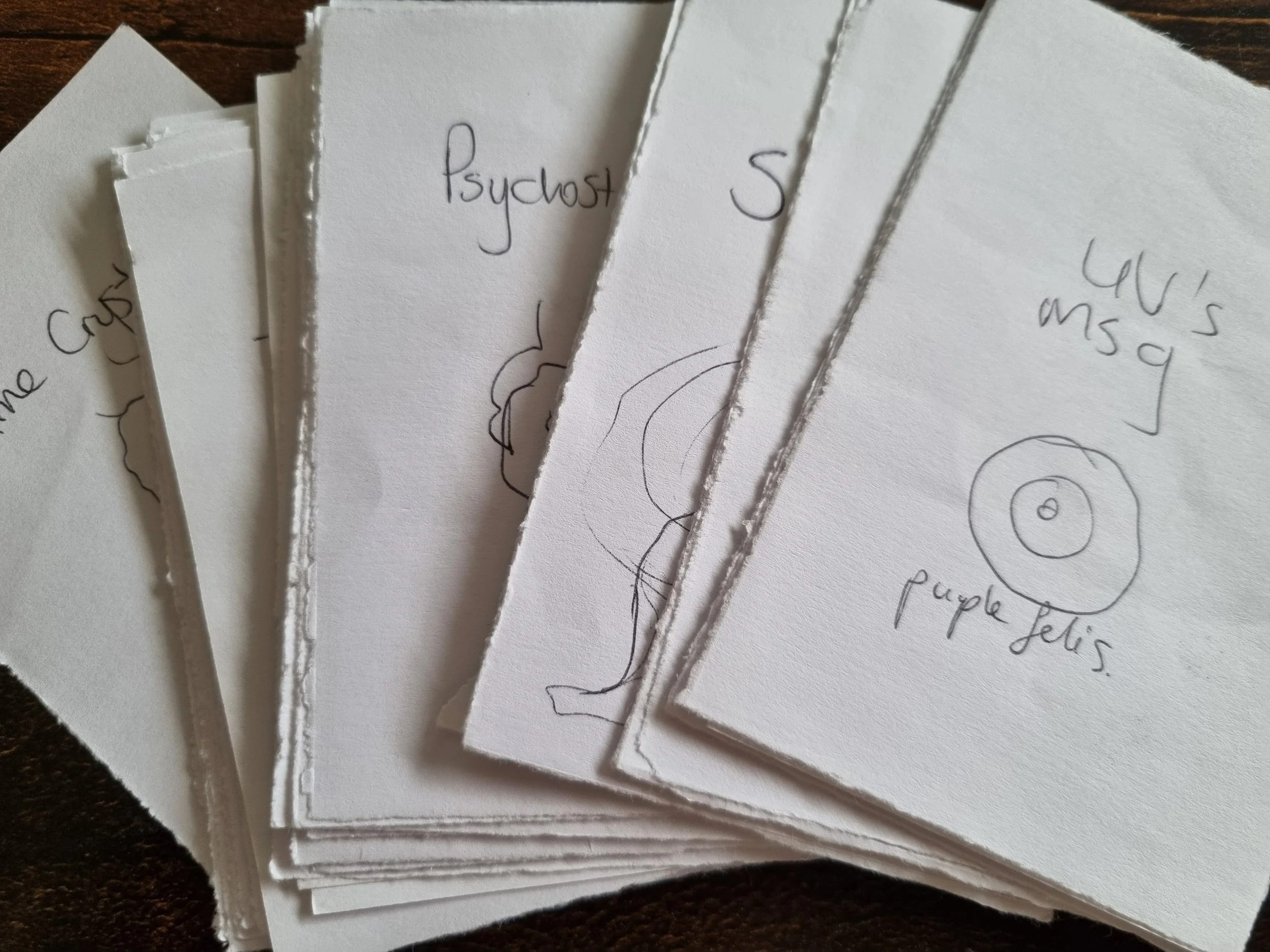
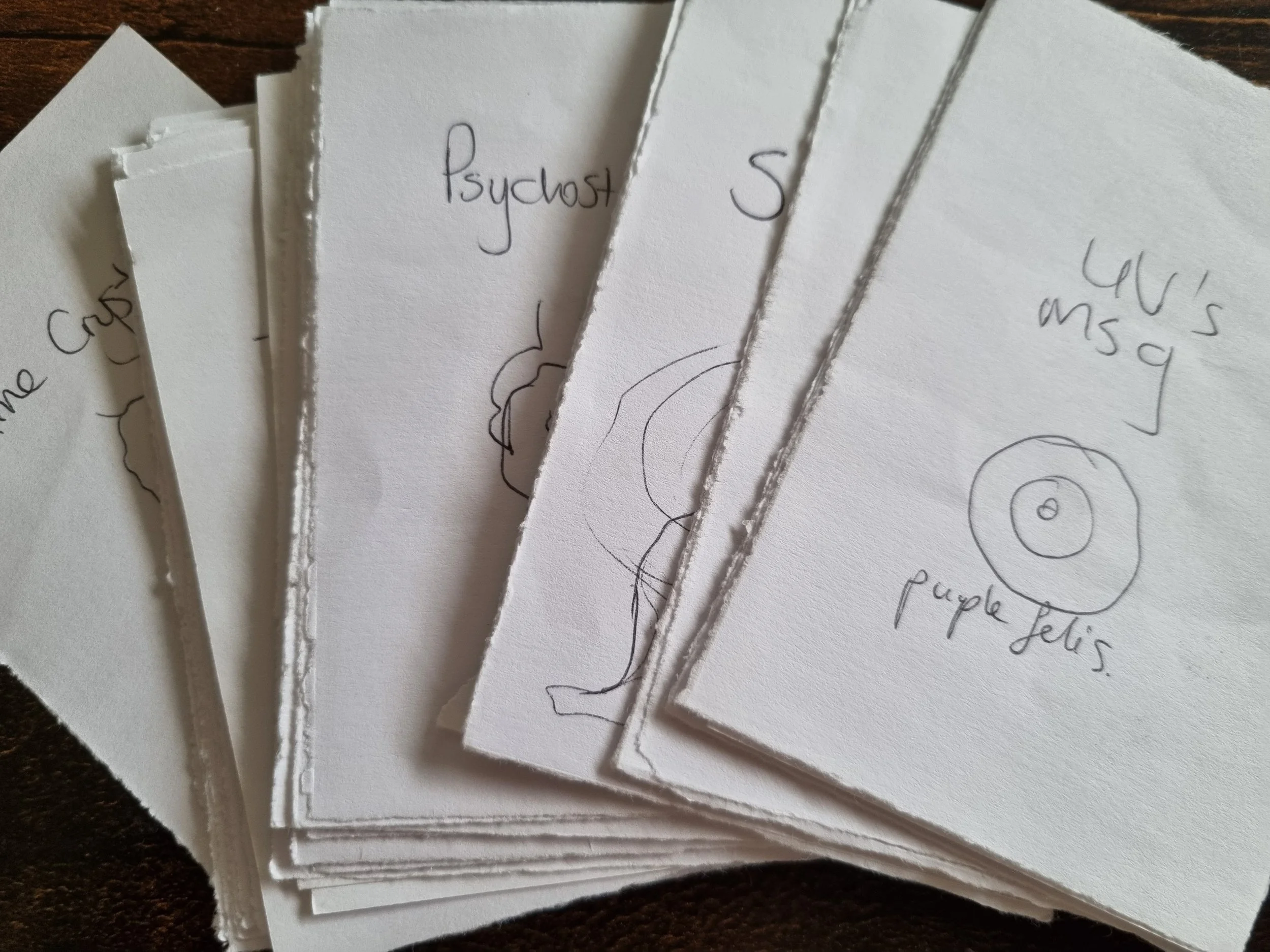
Rudimentary Canis Game card deck, used for testing
From 18 Characters down to 4
Over the past week I have trimmed back over forty different concepts, built sequences, and run days of simulation testing. The deck is playable, there are no dead hands, the sequences all work and are well balanced.
My brain has run a marathon.
Sun Eater is coming; it’ll soon be up to you.
Art can start
There is a Kerryn shaped hole in the door.
What comes next?
Sustainable comics and cards. You will finally be able to see The Canis in its true form.
Plus, our newsletter; I am working on making this valuable, different. I know some wonderful people have subscribed, and I will be getting this done soon.
To infinity and be..oh no wait that’s the wrong thing.
The Design That Almost Broke Everything
Spineless was supposed to be a small protest piece. Instead, it nearly broke the visual coherence of The Canis. Five days, multiple redesigns, and one accidental stress test of the entire world later, the condition has arrived.
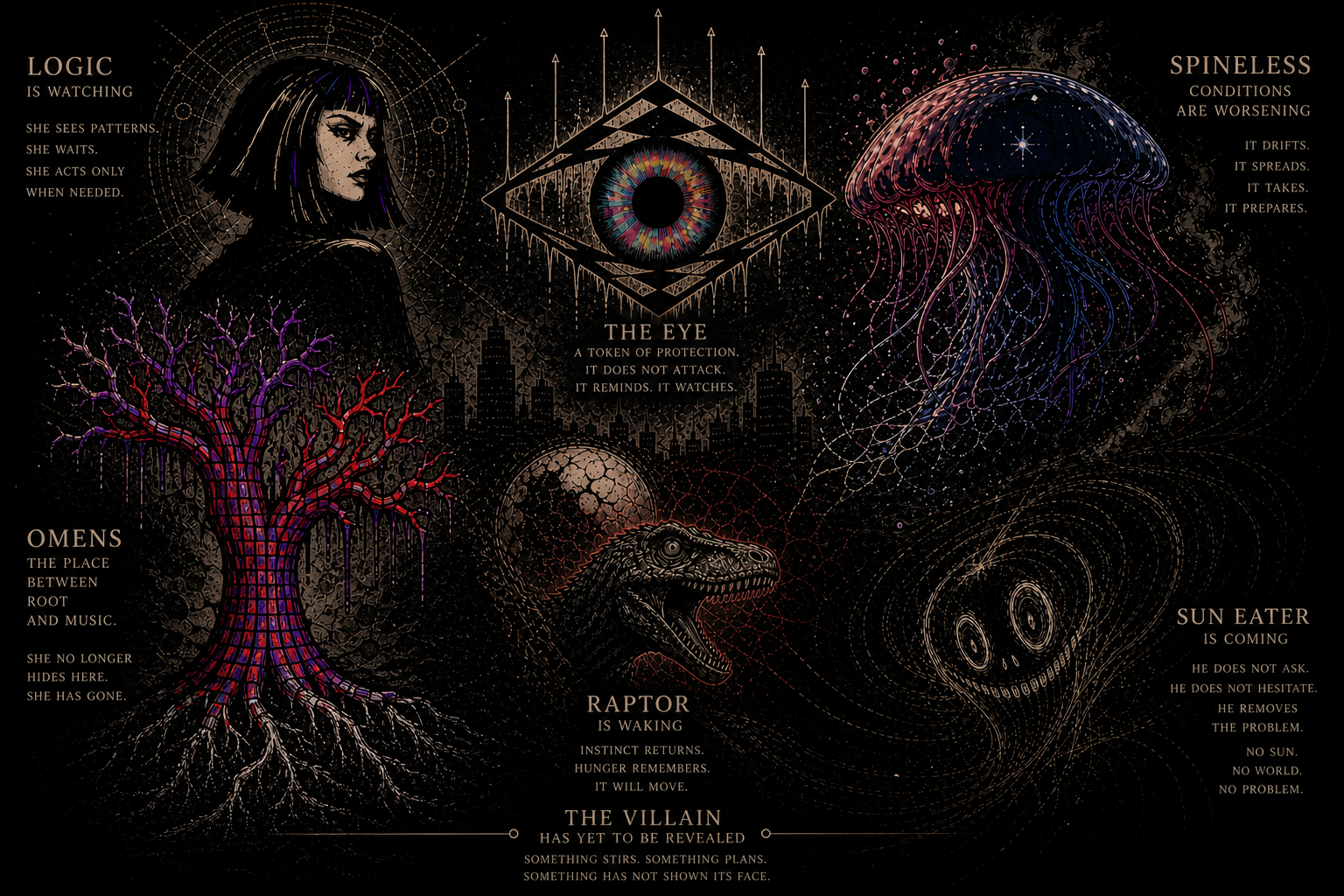
A conceptual piece testing if art styles can hold in the same world
When I set out to build The Canis, it was to try and solve a few problems at once.
I didn’t anticipate creating one instead.
Enter, the jellyfish.
I did not choose this design. It popped into my head one night.
I have a real fondness for political cartoonists. I grew up on Zapiro in South Africa and enjoy many of today’s artists.
The jellyfish concept was my own little protest. I shelved the idea for a couple of weeks until the jellyfish suddenly slotted into place within The Canis. A condition. Spineless. The enchanted ones.
It represents what confronts us. What we’re up against in The Canis.
Jellyfish nightmares
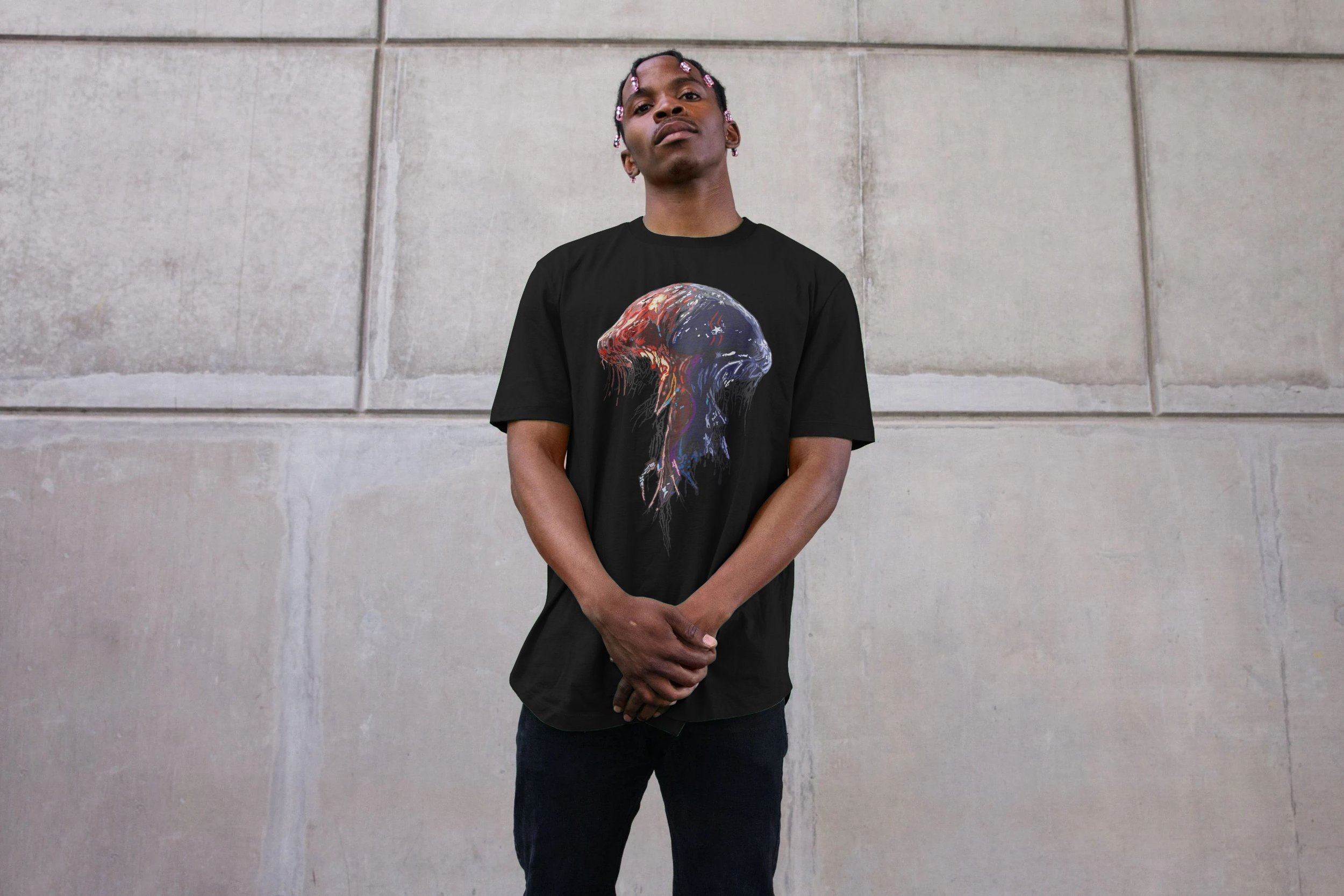
Spineless
I kept waking up at 5am with the jellyfish fading behind my eyelids. Hating it.
It took me 5 days to do. 3 of those were 7.5 hour sit ins.
The one that ended up on garment is the second third version.
I couldn’t see why. Was it conceptually weak? Probably. Was it good? I don’t know.
Nearly broke The Canis
Five minutes after I’ve built The Canis, I’ve designed a character that broke it. I could not tell if it was pushing one style of art too far.
If I have, which style do I go with, do I need to redesign everything and pick one or will this evolution of story be legible? My brain was a rolodex of symbols and iconography.
The irony is this is exactly what Spineless represents
The conditions that spread and fracture our systems, that push to the brink and force change.
I bit the bullet and released it into the wild. I still hated it.
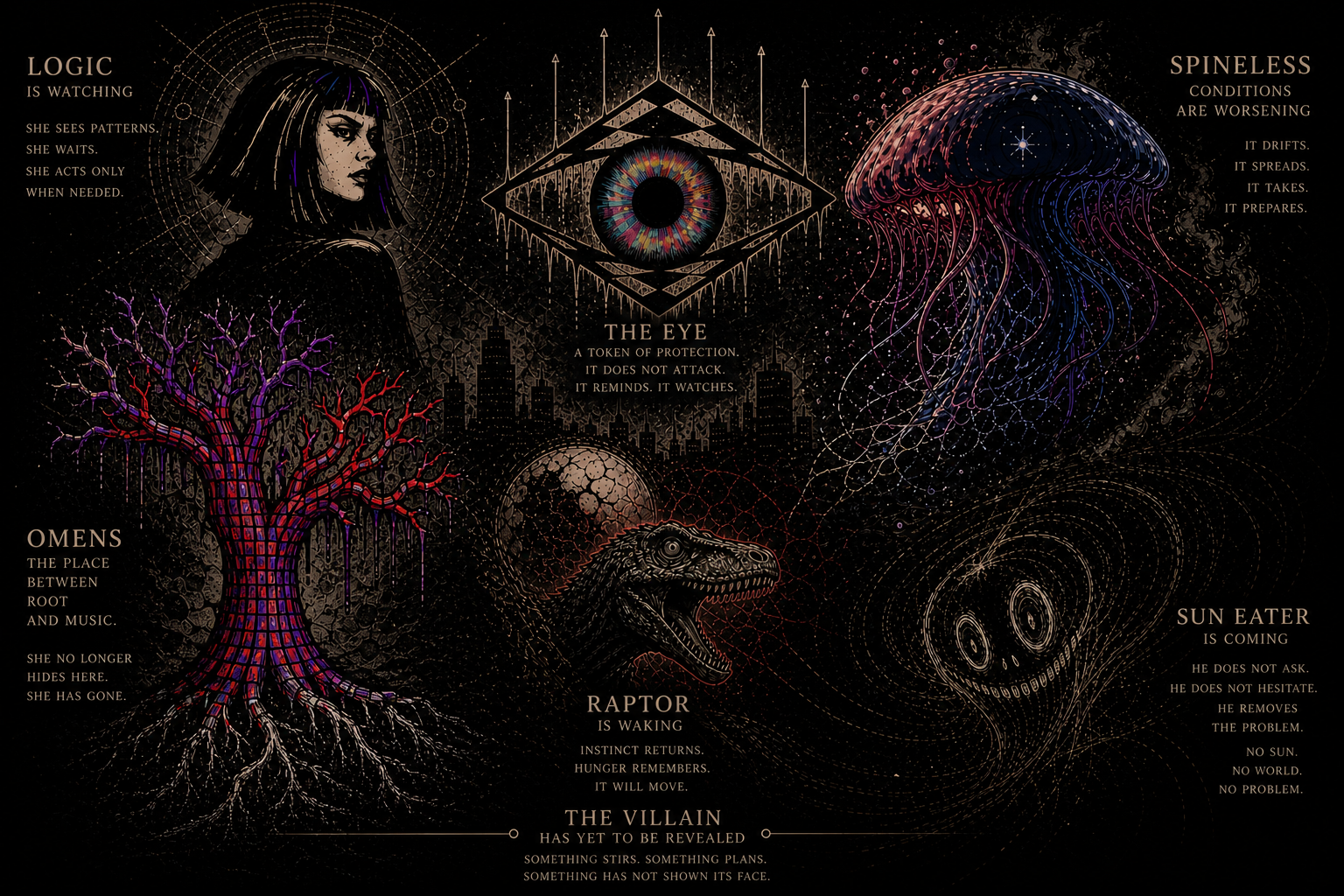
I mocked up the world. I needed to see conceptually if it held. No one knows that the Raptor design is really a sleeping geometric creature. No one knows that the Sun Eater doodle has morphed into a formidable Token. No one knows how dangerous it is. The fragments are only just being unearthed.
It didn’t break
To my surprise, it held. Even if the AI concept mock-up has gone a little literal with Raptor…He was inspired by the Bio-Raptors from Pitch Black. Still some of the best creature sound design ever made.
Spineless
The enchanted. Because pressure always finds a form. The condition. Organic streetwear for those who recognise.
The next 5 designs are planned.
The next fragment is being unearthed.
I thought the jellyfish was going to break The Canis.
It didn’t.
I like it now.